The heavy snow has finally vanished from the streets of New York, but for many homeowners in Brooklyn and Queens, a new problem is literally dripping from the ceiling. It’s a common irony: your roof stayed bone-dry during the coldest blizzards, yet it starts leaking the moment the sun comes out.
At Neat Services Corp, we specialize in diagnosing these "post-thaw" leaks. Here is why melting snow is often more dangerous for your home than a snowstorm itself.
The Flat Roof Challenge: Drainage and Standing Water
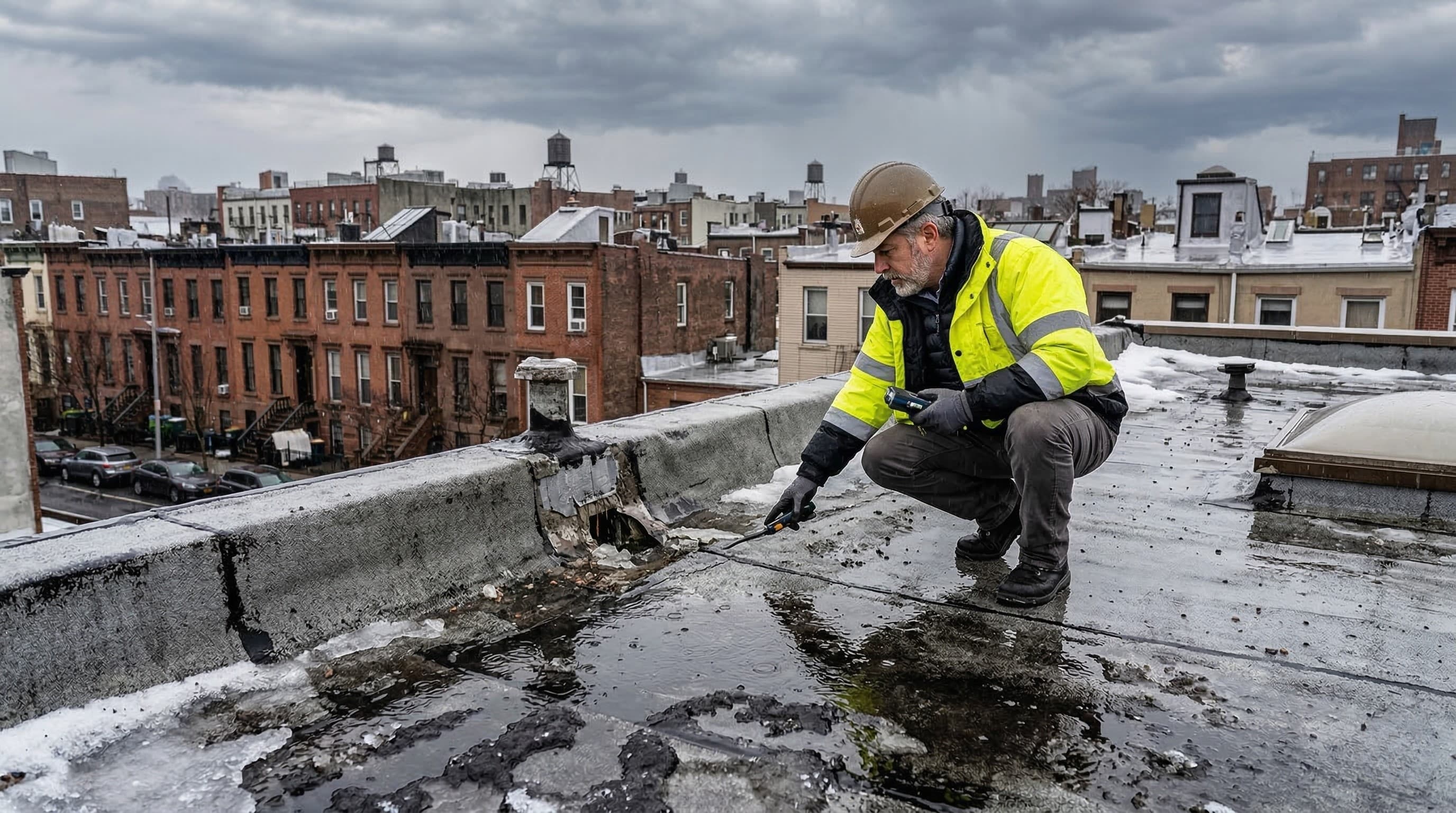
Unlike sloped roofs, the flat roofs common in NYC rely on a slight pitch to direct water toward drains or scuppers. During winter, ice can block these drainage points. When the snow on your roof begins to melt, it creates "ponding water"—pools of water that sit stagnant over your home.
If your flat roof drainage in NYC is compromised, that standing water will eventually find the path of least resistance. Even a microscopic crack in your roof membrane, which was sealed by ice just days ago, becomes a major entry point once the water turns liquid.
Common Culprits: Flashing Failure and Clogged Scuppers
In our years as a leading roofing contractor in Brooklyn, we’ve identified two recurring issues during the March thaw:
- Flashing Failure: The metal stripping around chimneys, skylights, and parapet walls (flashing) expands and contracts with temperature changes. This movement can break the waterproof seal, allowing meltwater to seep directly into your walls.
- Clogged Scuppers: Leaves and debris from the previous fall often clog the drains. When snow melts rapidly, these clogs cause water to back up, putting immense weight and pressure on your roofing system.
Documenting Damage for Insurance
If you find yourself needing roof leak repair in Queens or any other borough, documentation is your best friend. Before you clear the water or call for a patch:
- Take Photos: Capture the leak inside and the ponding water outside if safe.
- Save Debris: If a specific failed component is found (like a cracked drain cover), keep it.
- Professional Report: A certified roof inspection after winter provides the technical evidence insurance adjusters need to approve your claim.
Protect Your Property Before the Spring Rains
March drizzle is just the beginning. The heavy downpours of April will exploit every weakness the winter has left behind. Identifying and sealing these leaks now is the only way to prevent structural rot and mold growth.
Don't wait for the next storm. At Neat Services Corp, we provide expert diagnostics for New York's unique roofing challenges.
Contact us today for a professional roof evaluation and secure your home for the season.