Early March in New York is deceptive. The calendar hints that spring is just around the corner, but the thermometer consistently dips below freezing at night. While you might be enjoying the slightly warmer afternoons, your home's exterior is fighting a brutal battle. In fact, for your roof, this is the most dangerous time of the year.
If you want to avoid costly roof repair in NYC this spring, you need to understand exactly how these fluctuating temperatures are affecting your home right now.
The Silent Destroyer: The Freeze/Thaw Cycle
The biggest threat to your roof in late winter and early March isn't a blizzard; it's the cycle of melting and freezing.
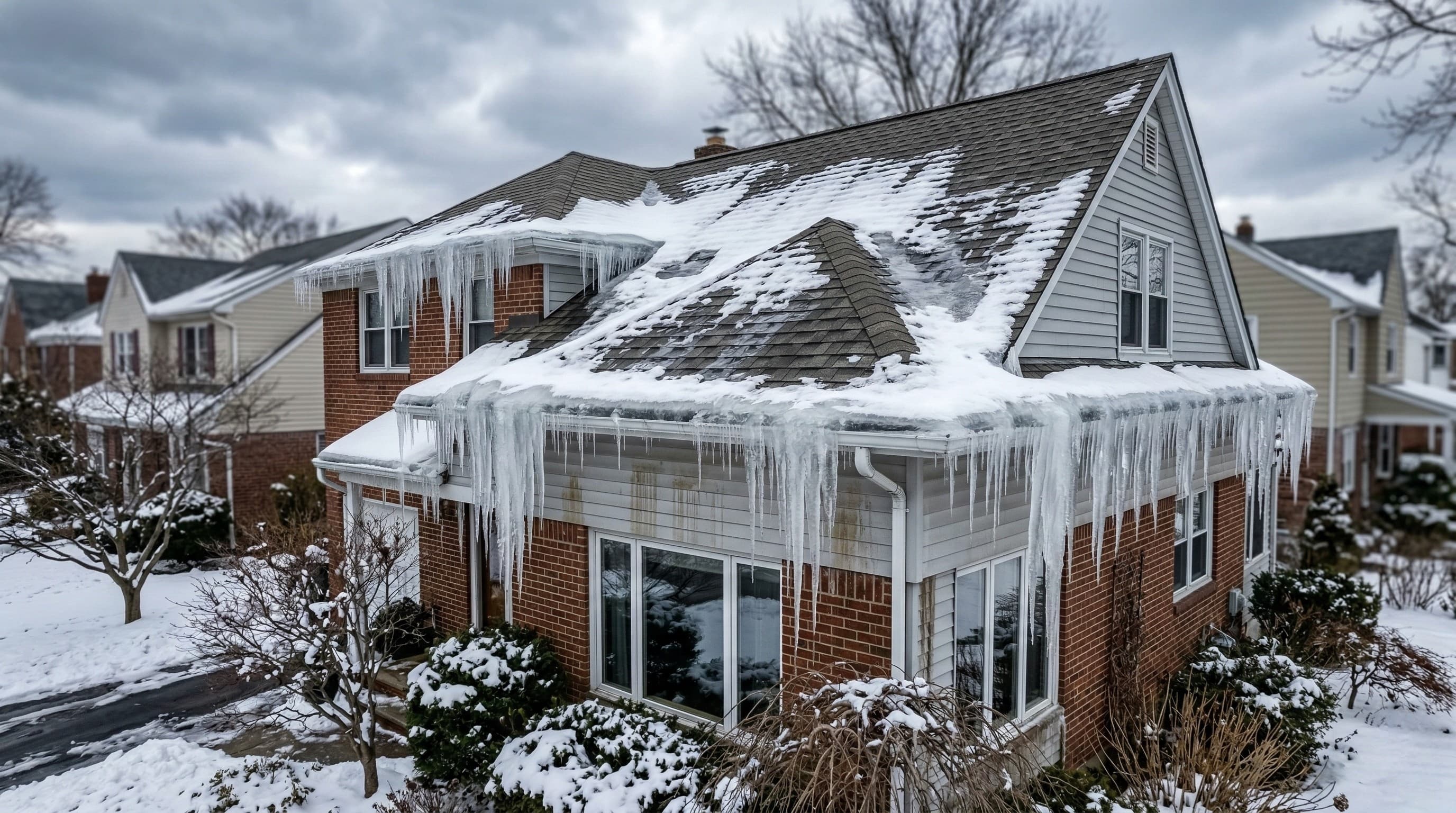
During the day, the sun warms your roof, melting the accumulated snow. This water runs down the slope of your roof. However, when the sun sets, temperatures plummet back below freezing. The water that reached the colder edges of your roof (the eaves and gutters) freezes solid, creating a wall of ice known as an ice dam.
As this cycle repeats over several days, new meltwater gets trapped behind the ice dam. With nowhere else to go, this water is forced backward, seeping underneath your shingles and penetrating your roof deck. This is the primary cause of severe winter roof damage in New York.
Warning Signs Your Roof is Compromised
You don't have to climb a ladder to know if your roof is taking a hit. Look for these warning signs inside and outside your home:
- Ceiling Stains: Those faint yellow, brown, or copper-colored rings on your ceilings or upper-wall corners are classic signs that water has bypassed your roofing system.
- Attic Moisture: Take a flashlight into your attic. If you smell mustiness, see condensation on the wood framing, or notice wet insulation, you have an active leak.
- Loose or Lifted Shingles: Ice expands as it freezes. When water gets under your shingles and turns to ice, it physically lifts and loosens the materials, leaving your home exposed to the elements.
Don't Wait: Protect Your Insurance Claims
If you notice ice dam damage in Queens, Brooklyn, or anywhere in the NYC area, time is of the essence. Many homeowners wait until the spring rains arrive to call a roofer, but this can be a costly mistake.
If water damage sits unaddressed, insurance companies may classify it as "neglect" rather than storm damage, potentially jeopardizing your insurance claims. Documenting the damage now and having a professional assess it immediately is crucial for getting the coverage you deserve.
Secure Your Home Before Spring Storms Arrive
The heavy rains of April are just weeks away. If the March freeze-thaw cycles have compromised your shingles, the upcoming spring storms will turn minor leaks into major interior damage.
Don't leave your home's safety to chance. At Neat Services Corp, we provide comprehensive evaluations to catch and fix winter damage before it escalates.
Call us today to schedule your emergency roof inspection. It is completely free, and it is the smartest step you can take to protect your home this season.